
Blog
Are Psychedelic Mushrooms Addictive?

Are Psychedelic Mushrooms Addictive? A Clinical Perspective
Psychedelic mushrooms, which contain the psychoactive compound psilocybin, are increasingly studied for their therapeutic potential. A common clinical question is whether psilocybin-containing mushrooms pose a risk for addiction or dependence.
With psychedelic mushrooms becoming more widely discussed — from podcasts to therapy headlines — it’s natural to wonder:
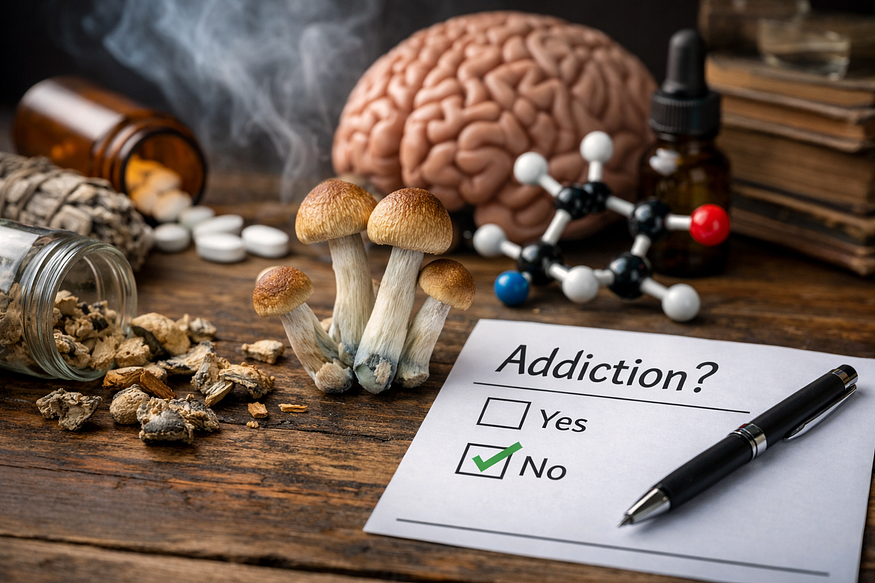
Can you get addicted to magic mushrooms?
The short answer? No, psychedelic mushrooms aren’t considered addictive.
But let’s unpack that in plain language.
What Does “Addictive” Really Mean?
When people talk about addiction, they usually mean things like:
- Strong cravings
- Using something compulsively
- Needing more and more to feel the same effect
- Feeling sick or uncomfortable when you stop
Drugs like nicotine, alcohol, opioids, and cocaine often check these boxes. Psychedelic mushrooms don’t.
How Psychedelic Mushrooms Work
That’s very different from addictive drugs, which tend to hijack the brain’s dopamine reward system and make you want more… and more… and more.
Can You Get Physically Addicted?
Nope.
Psilocybin doesn’t cause:
- Physical dependence
- Withdrawal symptoms
- Chemical cravings
You don’t need it to feel “normal,” and stopping doesn’t lead to physical discomfort.
What About Psychological Addiction?
For most people, also no.
In fact, many people say:
- One experience feels intense enough for weeks or months
- They don’t want to repeat it right away
- The experience can be challenging, not something you chase daily
While a small number of people might overuse psychedelics to escape reality, that’s not the same thing as addiction. It’s more about misuse, not chemical dependence.
Why Mushrooms Aren’t Easy to Abuse
Psychedelic mushrooms have some built-in “anti-addiction” features:
- Rapid tolerance — Using them again too soon often does very little
- Emotionally intense experiences — Not always fun or easy
- No dopamine loop — Less “reward” reinforcement
- Natural spacing — Many users feel no urge to take them often
These factors make daily or compulsive use uncommon.
Can Psychedelic Mushrooms Help With Addiction?
Interestingly, research suggests psilocybin may actually help people break addictive patterns, especially with:
- Smoking
- Alcohol use
- Certain substance use disorders
The idea is that psychedelics can help people see habits differently, process emotions, and make lasting changes.
So, Are Psychedelic Mushrooms Addictive?
No — psychedelic mushrooms are considered very low risk for addiction.
They don’t cause physical dependence, don’t trigger strong cravings, and aren’t associated with compulsive use the way many other substances are.
That said, they still deserve respect. Mental health history, setting, dosage, and legality all matter.
Clinical / Scientific Tone
(More formal, evidence-based, suitable for health or academic audiences)
Are Psychedelic Mushrooms Addictive? A Clinical Perspective
Psychedelic mushrooms, which contain the psychoactive compound psilocybin, are increasingly studied for their therapeutic potential. A common clinical question is whether psilocybin-containing mushrooms pose a risk for addiction or dependence.
Based on current evidence, psychedelic mushrooms are not considered addictive.
Defining Addiction in Clinical Terms
Substance addiction is typically characterized by:
- Compulsive drug-seeking behavior
- Loss of control over use
- Tolerance escalation
- Withdrawal symptoms
- Activation of dopaminergic reward pathways
Psilocybin does not meet these criteria.
Neuropharmacology of Psilocybin
Psilocybin is metabolized into psilocin, which primarily acts as a partial agonist at serotonin 5-HT2A receptors. This mechanism is associated with altered perception, cognition, and emotional processing.
Importantly, psilocybin shows minimal direct activation of mesolimbic dopamine pathways, which are central to substance addiction.
Physical Dependence and Withdrawal
Clinical and epidemiological data indicate that psilocybin:
- Does not produce physical dependence
- Does not cause withdrawal syndromes
- Does not require dose escalation for baseline functioning
Tolerance develops rapidly but dissipates within days, further limiting abuse potential.
Psychological Dependence Considerations
While psychological attachment to any psychoactive experience is theoretically possible, psilocybin use is not associated with compulsive patterns in population-level data.
The intensity and unpredictability of psychedelic experiences, combined with rapid tolerance, make frequent use uncommon.
Addiction Risk Profile
Compared to other psychoactive substances, psilocybin has:
- Very low addiction liability
- Low toxicity
- Minimal reinforcement behavior
- No known withdrawal syndrome
Large-scale studies consistently rank classic psychedelics among the lowest-risk substances for dependence.
Therapeutic Implications
Emerging clinical trials suggest psilocybin-assisted therapy may be effective in treating:
- Tobacco use disorder
- Alcohol use disorder
- Treatment-resistant depression with comorbid addiction
These effects are thought to result from increased cognitive flexibility, emotional insight, and long-term neural network changes.
Conclusion
From a clinical standpoint, psychedelic mushrooms are not addictive. They lack the neurochemical and behavioral hallmarks of addictive substances and may offer therapeutic benefits in addiction treatment when used in controlled settings.
Ongoing research continues to refine best practices, safety guidelines, and patient selection criteria.
